Why a laddoo?
You refill your vitamins your way. Why not your laddoos?
A little more to the story
The Properties of a Laddoo
What a laddoo offers starts with its ingredients. Depending on the recipe, sattu, urad dal, and nuts contribute plant protein; nuts and seeds provide predominantly unsaturated fats; dates, figs, pulses, and seeds add fiber; and grains, pulses, nuts, and seeds contain naturally occurring minerals.
Enjoyed in sensible portions as part of a varied diet, laddoos can be a satisfying way to include these foods regularly. Protein helps maintain body tissues, unsaturated fats provide energy, fiber supports digestive health, and minerals play roles in everyday functions such as muscle and bone health. The nutrient mix varies by recipe, so laddoos are one part of a balanced way of eating.
Not a dessert
Built around nuts, grains, and seeds.
Sweeteners are there to bring the flavors together, not to be the point. Most of what is in the box is nuts, grains, dried fruit, seeds, and ghee.
Not a supplement
These are foods.
Dhivi & Co. products are foods, not dietary supplements or medicines. They are not intended to diagnose, treat, cure, or prevent any disease.
Not a special occasion
The one you reach for every day.
Laddoos got filed under festivals somewhere along the way. But now, with awareness and knowledge about the benefits of certain ingredients, they have become an easy natural way to enjoy the benefits.
One laddoo. For any generation.
Made for the people you are raising, the people who raised you, and you.
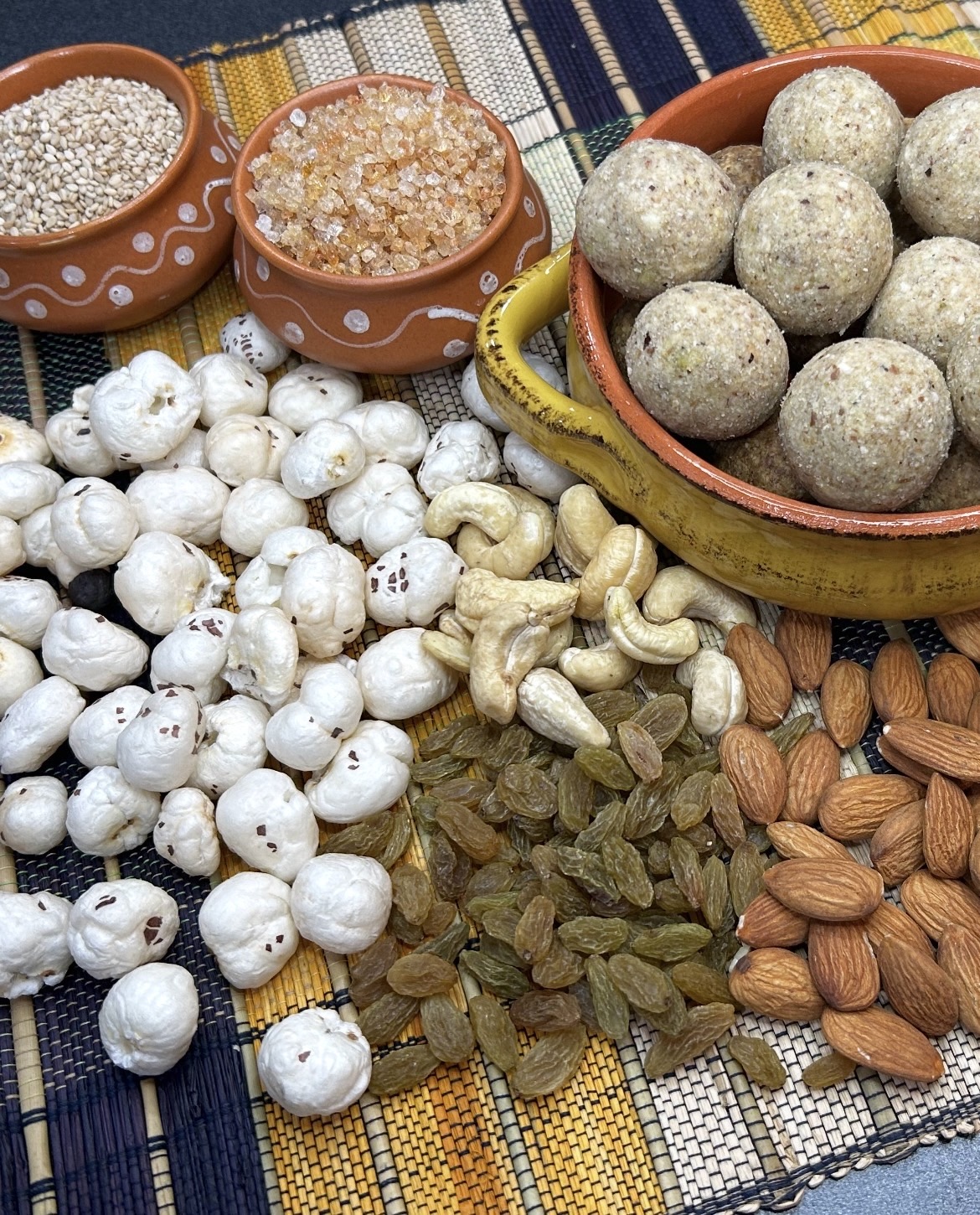 For growing kids
Nutrient dense bites for growing days.
Growing days are busy days. Prasi’s laddoos bring together nuts, grains, dried fruits, seeds, and traditional ingredients in satisfying little bites made with ingredients families recognize.
Within a balanced diet, those ingredients contribute plant protein, healthy fats, fiber, and carbohydrates. What they mostly contribute in practice is that a child eats something real between school and dinner.
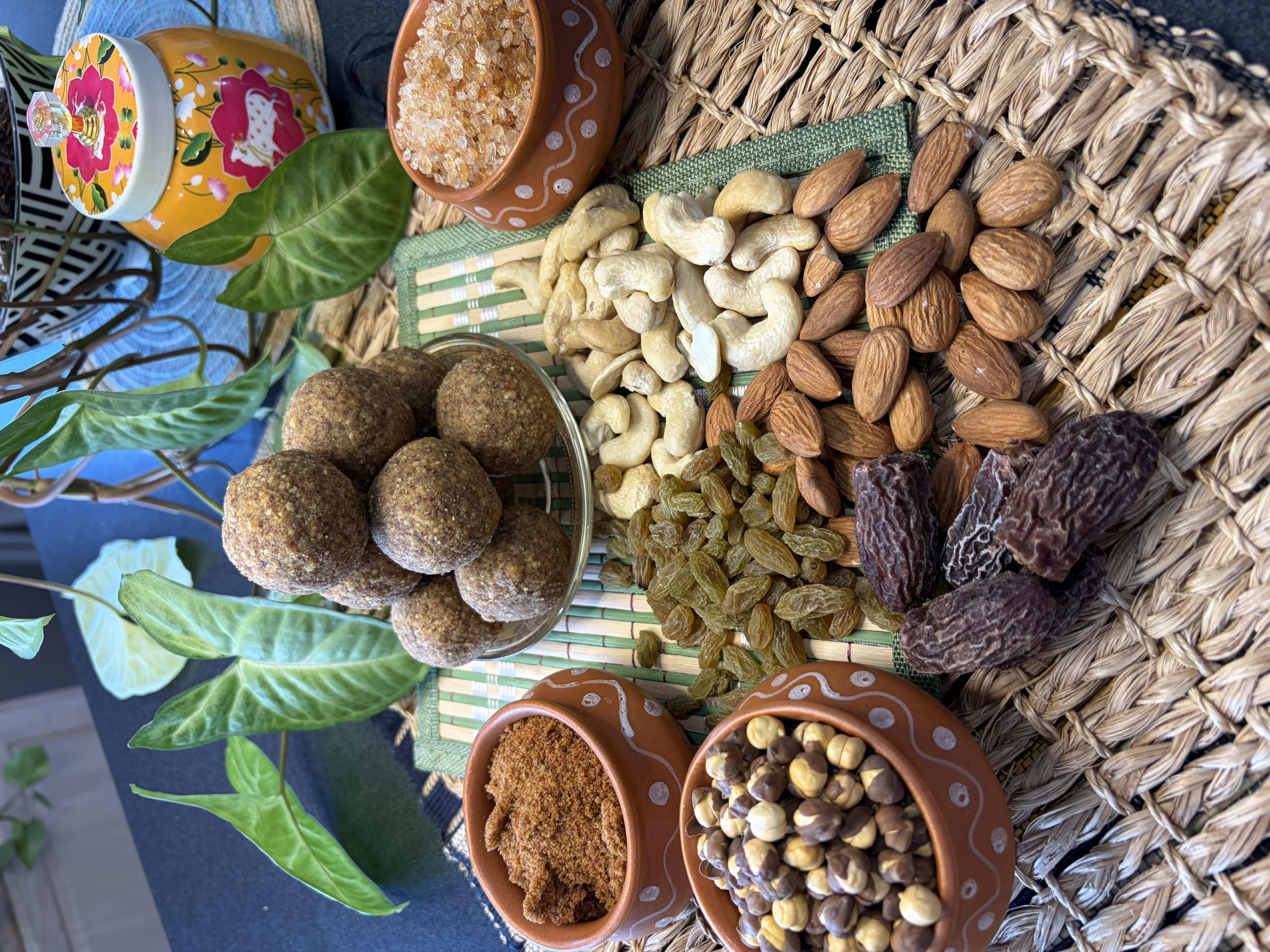 For parents & grandparents
For the ones who spent years taking care of us.
Nourishment for strength that lasts.
Sesame, ragi, almonds, sattu, nuts, and seeds are foods that contain nutrients important for normal muscle and bone health — protein, calcium, magnesium, and healthy fats. As part of a balanced diet, they contribute those nutrients in a form that is easy to eat every day and easy to chew.
These are foods, not treatments. They do not strengthen bones directly, reverse bone loss, prevent fractures, treat arthritis, or build muscle on their own.
For expecting, postpartum & busy mothers
Nourishment for the season that asks everything from you.
Gond katira, makhana, dates, almonds, sesame, coconut, ghee, and sattu all have long histories within Indian household cooking, including foods commonly prepared during different seasons of motherhood.
Prasi makes these the way they were made for her: dense, warm, and possible to eat with one hand at whatever hour the day has turned into. They are foods that may fit within a balanced diet during pregnancy and postpartum.
Nutritional needs during pregnancy and postpartum vary. These are not treatments and make no claim about milk supply, recovery, hormones, fertility, or complications. Please talk to your own healthcare provider.
Tradition, explained.
Ingredients our families have known for generations. Nutrition we understand a little better today.
Plant Protein
Ingredients that contribute plant protein to the diet.
- Sattu
- Urad Dal
- Almonds
- Cashews
- Pistachios
- Peanuts
- Walnuts
- Sesame
- Pumpkin Seeds
- Sunflower Seeds
- Flax Seeds
- Hemp Seeds
Healthy Fats
Ingredients that contribute predominantly unsaturated fats.
- Almonds
- Cashews
- Walnuts
- Pistachios
- Peanuts
- Sesame
- Flax Seeds
- Sunflower Seeds
- Pumpkin Seeds
- Hemp Seeds
Fiber
Whole food ingredients that contribute dietary fiber.
- Sattu
- Urad Dal
- Dates
- Raisins
- Dried Figs
- Ragi
- Nuts
- Seeds
Minerals
Ingredients containing naturally occurring minerals.
- Sattu
- Urad Dal
- Ragi
- Almonds
- Cashews
- Sesame
- Pumpkin Seeds
- Sunflower Seeds
- Hemp Seeds
- Dates
- Dried Figs
Ingredient and nutrition information is provided for general educational purposes only. Dhivi & Co. products are foods, not dietary supplements or medicines, and are not intended to diagnose, treat, cure, or prevent any disease. Individual nutritional needs vary, particularly during childhood, pregnancy, postpartum, and older adulthood. Customers with specific dietary or medical concerns should consult an appropriate healthcare professional.
“The laddoo you reach for every day, not just on special occasions.”